Intent mapping
Identifies what users truly want behind each keyword, so your pages match expectations instead of missing them.

Make your content match what users actually search for
Most websites don’t struggle because of a lack of content. They struggle because that content answers the wrong questions. Someone searches, lands on your page, scrolls for a few seconds and leaves, not because the design is bad, but because what they expected to find simply isn’t there.
Search intent analysis closes the gap between what people search for and what your pages deliver.
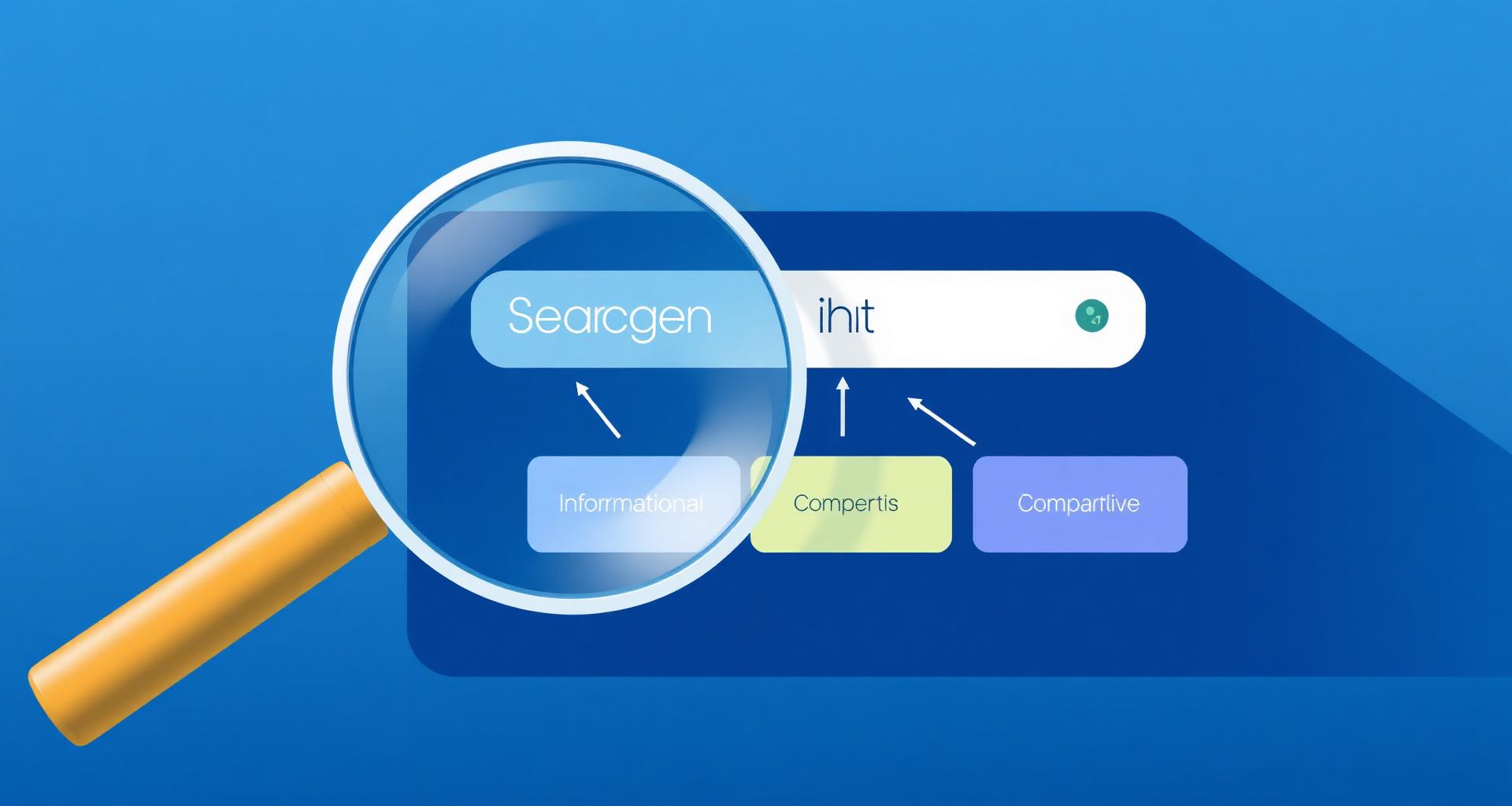
Search intent analysis exists to close the gap between what users search for and what your website delivers. It’s the process of understanding what a user actually wants when they type a query into Google, and aligning your pages so they meet that expectation with precision. Not assumptions. Not guesses. Clear intent matching that turns visits into meaningful actions.
Ranking alone doesn’t build a business, relevance does. Search engines have evolved to prioritize pages that satisfy intent, not just keywords. Traffic without alignment becomes noise: people arrive, don’t find what they need, and disappear. When intent is understood correctly, content becomes sharper, user journeys become clearer, and every visit has a higher chance of turning into something valuable.
We break down your existing pages and the queries they target, then map those queries against real user expectations. Keywords are grouped by intent patterns: informational, transactional, comparative. And analyzed against what currently ranks. Some pages attract the wrong audience, others miss opportunities entirely, and many sit just close to ranking well but misaligned. Each page is restructured so its content, structure, and messaging match what users are actually looking for.
This isn’t a surface-level keyword check. It involves analyzing search engine result pages, identifying content patterns, evaluating competing pages, and understanding how different types of intent influence rankings.
Done properly, this minimizes wasted traffic and prevents investing in content that will never convert.

/What you receive
Align your content with what users actually expect to find.
Identifies what users truly want behind each keyword, so your pages match expectations instead of missing them.
Studies what Google already rewards, so content is positioned in a way that fits proven patterns, not guesses.
Uncovers queries where small changes can lead to significant ranking and conversion gains.
Adjusts structure and messaging so visitors instantly recognize they’re in the right place.
Existing pages restructured to match the right stage of the user journey, turning underperformers into reliable assets.
When intent is aligned, traffic stops being just a number. Visitors spend more time on your pages because the content feels relevant from the first seconds. Bounce rates drop, engagement increases, and conversion paths become more natural.
In practical terms, this often means turning existing pages into consistent performers, instead of constantly chasing new content ideas. A page that once attracted the wrong audience can start bringing in qualified visitors who are ready to act.
Over time, this builds a more stable growth model: less dependent on volume, more focused on quality.
Search intent analysis isn’t instant, but the first signals show fast. Each adjustment compounds, turning underperformers into reliable conversion assets.
Key pages and keyword groups are analyzed in depth. Early insights appear within the first couple of weeks, clear mismatches and immediate opportunities.
Pages are restructured and repositioned. Some respond fast, especially those already close to strong rankings, others build momentum gradually.
As search engines re-evaluate relevance, existing pages turn into consistent performers: quality of traffic rises, not just volume.
Working together means looking at your website not just as a collection of pages, but as a system that either matches user expectations, or misses them. Once that becomes clear, the path forward is much easier to define.
WHAT HAPPENS NEXT
150+
Clients served
2015
Year founded
95%
Client retention
20+
Team members
What else could use a hand?
Thank you. We have everything we need to prepare a useful first call.
